TIME magazine's article from 2008 still holds a lot of truth about animals being impacted by climate change. The article discusses how while humans are being intensely affected, we can more easily adapt. Animals, though, cannot so easily adapt quickly. If an animals habitat is changed as rapidly as we're seeing they do not have time to adapt themselves and may not be able to migrate, instead they become extinct. Now when protecting animal's habitats, conservationists need to be sure that their habitat stays in the condition that is best for those animals.
To read to full article here!
Showing posts with label Change. Show all posts
Showing posts with label Change. Show all posts
Thursday, May 8, 2014

Sea Level Rise

Figure Source: http://www.nasa.gov/images/content/121630main_slr_thermal.jpg
This graph shows how in just the past 50 years sea level has risen over 20mm. While that doesn't seem like too much, it appears to be increasing more rapidly and will continue to as the Earth's temperature continues to rise. With rising sea level, coastal towns and cities are at risk for flooding, which can have detrimental damage and cause massive evacuations of cities. Many cities already have plans (look back at my post about Massachusetts's Plan) for rapid sea level rise that include adaptations and mitigation strategies. If you live near the coast, check out if your state has a plan!
Denmark hopes to abandon coal, oil, and gas by 2050!
Denmark is currently using renewable sources for about 23% of the countries energy consumption. Ambitiously, it hopes to be 100% reliant on renewable energy by 2050. The country has excellent conditions for wind farms, and is in the process of setting up a 600-megawatt wind farm between themselves, Germany, and Sweden. They are confident that they will be able to reach their goal, saying the only difficulty will be in regards to transportation, but are currently working on means of electric storage from wind turbines. To read more about Denmark's goal's and their process towards that goal, click here!
Peak Oil
Here is a link to a blog post by Matthew Wild. He describes what "peak oil" is and the original theory around it. Peak oil is a point in time where we have reached out maximum output of oil, and all the time thereafter the production of oil declines. This is a very relevant and serious issue right now because we are at that point. Very soon we will have to be making decisions about other, more sustainable energy sources because we will have no more gas and oil. It sounds crazy, and maybe not in our lifetime, but our children could see the end of oil and gas. A scary but real thought. It's time to start focusing on renewable sources and making those a priority, instead of trying to find ways to make more oil appear out of the Earth.
Tuesday, May 6, 2014
Coffee Production Hit Hard
Drink coffee? Climate change is already affecting that, and with changes in air temperature and pest control, coffee production is dropping fast. Coffee beans grow in a certain climate, as do most products, and because of the changing temperatures and climate around the globe the production of coffee is decreasing. Bummed that soon coffee may become scarce? I would worry more if you were a coffee bean farmer. It's projected that hundreds of thousands of people who are part of coffee bean farms and families will soon be negatively affected. Many already are. Check out a video to learn more about it here!
Gay Head Lighthouse

One of the lighthouses on Martha's Vineyard is set to be moved this fall. Because of erosion, the shore is growing closer and close to the lighthouse, 46 feet to be exact. They need around 40 feet in diameter around the lighthouse in order to safety move it, so that it can still be used, which means they have to act now or within less than 2 years it there would not be enough land. This lighthouse it vital to mariners which is why there is urgency to move it! It has been standing since 1854, and will hopefully continue to stand, just in a different place!
To read about the project and learn more about the lighthouse's history check out it's website here!
Carbon Tax
This video gives a short explanation about how a carbon tax works. Specifically this video talks about the carbon tax that is being implemented in Australia. The animations and language make it easy to understand and it's short, so you don't have to sit around all day to learn about carbon taxes, just two minutes!
Monday, May 5, 2014
Climate Change Games
If you want your kids to start being involved in the discussion on climate change (since the future will soon be in their hands) a great way to do that is to have them play games! This website has tons of games, ranging through different ages, from 7 until teen years. There are simulation games where your child could be acting as the ruler over many nations and has to make decisions to keep the world in check! Or they could play puzzle and brain teaser games about climate change. Whichever games they play, it gets them to start thinking about climate change and our world. Before we know it, our youth will soon be the worlds leaders and scientists and action against climate change will be in full swing (or so we hope!)
Check out the games or other resources Global Warming Kids has to offer here!
Check out the games or other resources Global Warming Kids has to offer here!
EPA Educational Resources
As I've mentioned before I am an education major in college, which means I am always on the look out for resources and activities for my future students. Recently I used the EPA website for a project for my Climate Change course, and saw that they had resources for parents and teachers. In this section of their website, they have quizzes, games, and homework help for students as well as lesson plans and resources for parents and teachers. I think this is great because it's coming right from the EPA but it is being brought to the level of students. This authenticity will help them feel more engaged and important in their learning about the environment and the global climate. Check out their resources here!
Unplug Unused Appliances
I'm all about finding ways we, the little people, can do things to help fight climate change! We know it's happening but until the government asks us to vote on something, all we can do is take small steps and advocate for change. I grew up being told to always unplug my fans and other appliances after I'm finished using them. Here is a link to a list of appliances YOU can unplug when you're not using them! Basically anything that doesn't need to be running, like your fridge or freezer! This not only reduces the amount of energy you're using, helping the environment (every little bits counts) as well as can help reduce your electric bill, even just a bit (once again, every little bit counts). So check it out, and see what you can start unplugging to help the Earth and your wallet!
Species threatened across the globe!
In the past I have symbolically adopted animals through WWF, to donate to help endangered species. Species can become endangered for a variety of reasons: natural selection, famine, disruptions in the food chain, hunting, depletion of their homes, and climate change. Climate change is effecting species all across the globe on land and in our oceans. WWF has a link on their page (here) that touches on just a few animals from different places around the world that are at risk, from the same culprit: climate change.
One Year Without Showering
Recently BuzzFeed created a post about a man, Rob Greenfield, who decided that he wasn't going to shower. He still bathed and washed himself, but he did not take an indoor inside a porcelain tub shower. Instead he bathed where ever he could find water! Leaky fire hydrant, rivers, lakes, etc. It started because he wanted to restrict his water usage, including drinking water. After six months he found it to be fairly easy, and decided to continue. His friends joined, he found romance, but it wasn't all an easy process. Of course it was more difficult when temperatures dropped, but he made it through and decided to keep going on. Although I'm not ready to cut out showering, because I don't live in a place that has that much access to bodies of water, it's made me think about cutting down my shower time, making sure I turn off the faucet when I brush my teeth or do dishes. We can all take those small steps to limit our water down to what we need. No extra.
Read the post here!
Read the post here!
Sunday, May 4, 2014
Natural Resources Defense Council
The NRDC website has information about all different aspects related to climate change, issues in the environment, and policies. They also have a section where you can donate to help their cause, or you could "act now" and help out a cause by signing a petition. You can then sign up to receive email updates about the cause you signed a petition for! Check out the "Action Center" here!
Saturday, April 26, 2014
Carbon Offsets
Carbon offsets; a scam or something good? I had never heard of carbon offsets before and was surprised to learn that carbon offsets work like this...You pay money, as an individual or business, based on your carbon output. So you can calculated based on your car, how you heat and power your house, how often you fly and/or take the bus, to determine your carbon output. Then you pay the amount the calculator determines, and that goes to funding projects such as renewable energy or reforestation, therefore “offsetting” the carbon output you give off living your daily life.
A renewable energy certificate or REC is a representation of the property rights of the nonpower qualities (environmental, social, etc) of generating renewable energy. REC’s allow buyers to support renewable energy even when there may not be any renewable sources local to them. The figure below shows how the work by detailing how physical electricity and REC’s work separately and together in a renewable generator.
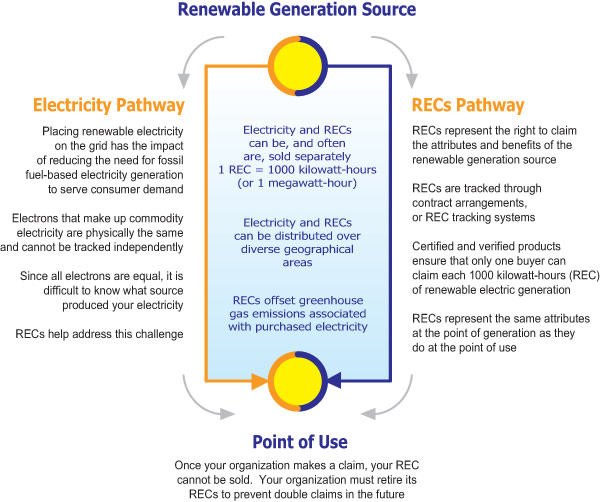
Figure 1: Renewable Energy Certificate Use
Image Source: http://www.renewableenergycredit.com/REC_chart.jpg

This image shows how a REC works. It shows the two components of a renewable generator source: physical energy and REC’s and how they work together.
At http://www.carbonfund.org/ I plugged in my information to find out what my carbon offset would be. They had me input how many people lived in my house, what kind of heating we use, what make and model my car was and how many miles a year I drive it. Since I do not own a house, but live at home (when I’m not at school) I put in that there are 6 people in my house, instead of just me, because all six of us live and use the heat and electricity, etc. I added my car, but because I do not drive a lot at school that number was fairly low, compared to what it might be if I had to commute to work or school everyday. My total was $333.52. Again, that number might be different if I could calculate for just myself and not my entire family. It would also be different if I took into account my lifestyle at school. If I wanted to simply offset 1 ton, it would cost me only $10.
At http://www.nativeenergy.com/ I plugged in information differently. They simply wanted to know the number of houses and specific sized cars (small, midsized, large). So I said one house and one midsized car. My output according to this site was 18 tons of carbon, or $252 to offset. This was less, but they did not need specifications for how big the house is or how we heat it. They also narrowed down car by approximate size, but not make or model. On this site, simply offsetting 1 ton would cost me $14 dollars.
If I had to pick one of these to complete my offset, financially I would lean towards Native Energy, because plugging in 1 house, 1 car was cheaper for me. But the Carbon Fund allowed me to be more specific and while it was using averages and did not take into account that maybe I never turn on my lights or only run heat for 2 months rather than maybe always having a light on, or running my heat from October to April, I was able to get a more realistic view of my carbon footprint. The Carbon Fund has far more partners than Native Energy, and is a non-profit organization, but Native Energy had some more recognizable clients including companies that work in food, music, and apparel such as LiveNation, Clif Bars, and Under Armor. Each included insurance agencies and environmental agencies, which I am not as familiar with making it difficult to judge who has more reputable partners. I am curious to know why Native Energy would charge $4 each ton to offset. That doesn’t seem like much when dealing with 1 or 2 tons but make it thousands of tons and the difference is much more noticeable.
This strategy of taking money based on your carbon output, in tons, and turning it towards making clean energy or reforestation sounds well and good, but it could lead to more issues. I think that people who are struggling right now to pay for heat that they need (especially during the Polar Vortex this past winter!) would fall into debt and could end up fighting this. It seems as simple as, use less heat or drive less, but people still need to find a way to heat their homes and get to work (not everyone has public transportation around them). I think that this sounds great, but until there are other options, which this is working towards supposedly, that people can turn to instead of fossil fuels. I think that if there were readily avaiable and affordable options for people to switch too, this kind of offset or tax could be a great motivator. It just has to be done in the right way at the right time, and who gets to decide what way that is and when? Those are the tough questions.
Bibliography
http://www.epa.gov/greenpower/gpmarket/rec.htm
Tuesday, April 22, 2014
Going Green: Success Stories
Happy Earth Day! In honor of Earth Day I thought I should look into some of the things that are happening in making our world more "green". I came across a website dedicated to Earth Day. This site has the history of Earth Day, events for Earth Day, resources and ways that you can become part of the movement towards a "green" Earth! The section that I am posting about contains pages and pages of small and big success stories from around the world. It includes news about places around the world that are taking small steps such as switching to led lights (Notre Dame Cathedral) to big steps such as switching to electric school buses and implementing free solar powered charging stations around cities. It's a great way to see what kinds of things are being done and can be done in the future! Check out the site, and see if theres anything near you and if there's anything you can do to help out!
Monday, March 24, 2014
What Led the Vikings to Leave Greenland?
During the Medieval Warming Period around 1000 CE the vikings in Greenland prospered. Because they were more farmers than fisherman, their agriculture flourished. With the melting of the ice on and around the island, the Northwest Passage opened for travel and trade with European countries. As the temperatures dropped falling into what is known as the Little Ice Age, a drop of about 1.1 degree Fahrenheit by around 1700 CE, many things happened. This climate change meant a change in the amount and placement of ice, changing their boating routes. Around the same time, the demands for their exported goods was lowered and the more difficult boating routes along with less income made it more difficult to attain the necessary imported supplies. Colder temperatures also brought freezing ground, and difficulty farming; although evidence suggests they were able to adapt to fishing fairly easily. Therefore because the drop in temperature brought changes to the climate and altered their land and boating routes, the vikings also had to adapt and leave Greenland.

This figure shows the temperature from the year 1AD to 2000AD. As you can see there is a gradual drop from around the year 1000 to around 1700. This is the drop from the Medieval Warming Period into the Little Ice Age, about .6 degrees Celsius or about 1.1 degrees Fahrenheit. This is the period in which the Vikings in Greenland experienced changes and decided to leave.

Figure 1: Temperature from 1AD to 2000AD
This figure shows the temperature from the year 1AD to 2000AD. As you can see there is a gradual drop from around the year 1000 to around 1700. This is the drop from the Medieval Warming Period into the Little Ice Age, about .6 degrees Celsius or about 1.1 degrees Fahrenheit. This is the period in which the Vikings in Greenland experienced changes and decided to leave.
Wednesday, March 19, 2014
What can YOU do about Climate Change?
This video gives understandable explanations and tips on what we, the average person, can do about climate change. In the video the narrator explains what a carbon foot print is, and how some of the things we do each day can actually have a significant effect (especially factoring in millions of people doing these things). The video has funny animations and is very easy to understand; using common language at a slow pace. A huge question that I and many of my peers have had while learning about climate change this semester is, what can I do? This video finally gave me some straightforward and realistic answers. Just don't forget to help spread the word about climate change!
Tuesday, March 4, 2014
New York Begins to Prep for Future
In this Huffington Post article, we learn that New York's largest utility company, Consolidated Edison, is now taking steps to prepare for years more of the crazy weather we've experienced the past few years. It seems that the damage sustained from Hurricane Sandy was the last straw, and the company is taking steps to prepare to extreme weather and the possibility of a rise in sea levels. They plan to collaborate with other companies to create long-term solutions, and believe that more companies will join them in their shift.
Ready the article here!
Ready the article here!
Monday, February 10, 2014
Stop Climate Change Poster
Before It Changes You!
This image that WWF created struck me because it makes climate change personal. There are many images and posters and organizations that are advocating for an end to climate change so that we have a better planet. We've all seen cartoons and pictures of green hills and blue skies versus brown landscape and smokey skies, but this (as dramatic as it may be) brings climate change to a very personal level. This kind of image as a scare tactic may just be the thing that people need to see in order to get them thinking more proactively about what they can do to help in our battle with climate change.
This image that WWF created struck me because it makes climate change personal. There are many images and posters and organizations that are advocating for an end to climate change so that we have a better planet. We've all seen cartoons and pictures of green hills and blue skies versus brown landscape and smokey skies, but this (as dramatic as it may be) brings climate change to a very personal level. This kind of image as a scare tactic may just be the thing that people need to see in order to get them thinking more proactively about what they can do to help in our battle with climate change.
Saturday, February 1, 2014
Status Quo

The status quo is a barrier, like a giant boulder on a hill that, although slowly changes over time (slowly gets pushed up the hill) muffles the voices and ideas of those who want that change now. The person on the upside of the boulder/status quo represents the "norm" of societies current views. While the person on the low side of the boulder is fighting to push the status quo while society or the man on higher ground, is holding them back because they currently have the upper hand.
Image Source: http://graphics8.nytimes.com/images/2012/02/22/opinion/22status-quo-toon/22status-quo-toon-blog480.jpg
Subscribe to:
Posts (Atom)